Scaling retention and revenue at Kumu
As Senior UX Designer in Kumu's Core Payments pod, I worked on how livestream viewers buy and manage coins, Kumu's in-app currency, to create recurring value for paying users in a competitive livestreaming market.
- Role
- Product strategy, visual and interaction design
- Team
- Business Intelligence, Core Payments scrum team
- Company
- Kumu
- Timeline
- May to July 2022
- Outcome
- Task completion up 9.8% on release and 20% by quarter's end. Tipping, the follow-on stream, reached $10,000 in its first month.
The problem
Kumu had strong overall engagement, but repurchase rates among paying users were plateauing. The average M1 repurchase rate from July to December 2021 was 35.7%, short of the 40% target for 2022.
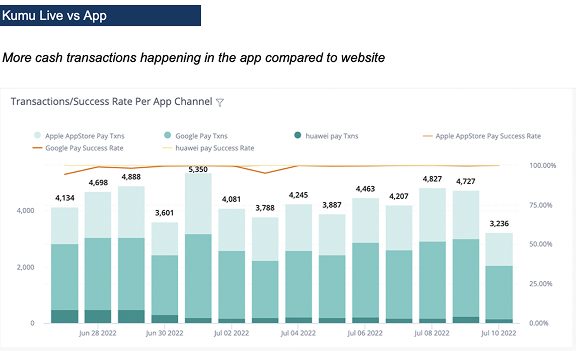
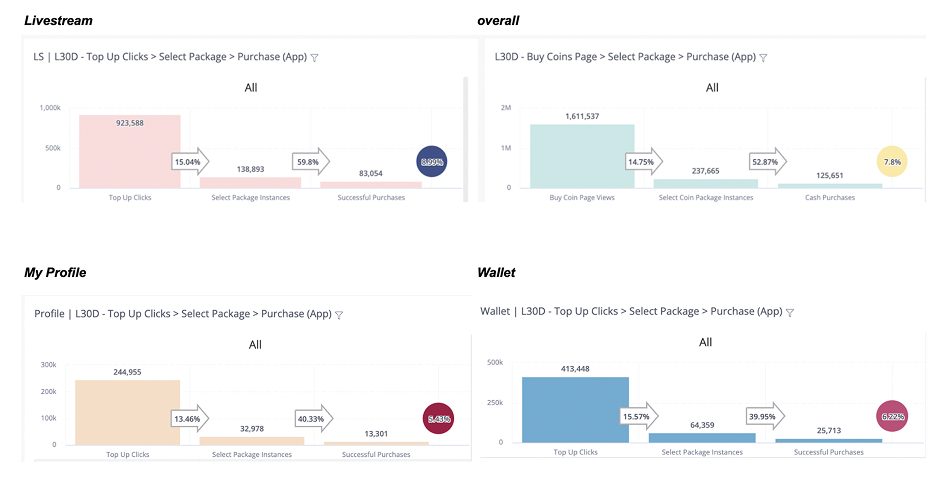
Deeper product and funnel analysis revealed a clear behavioural pattern.
Two opportunities came out of the investigation:
- Automating repeat purchases for loyal users, through a subscription model
- Optimising the Buy Coins page to reduce funnel drop-off and increase conversion
Discovery and research
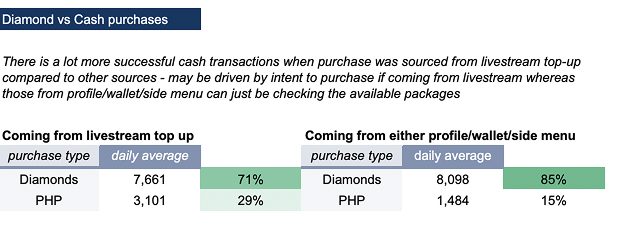
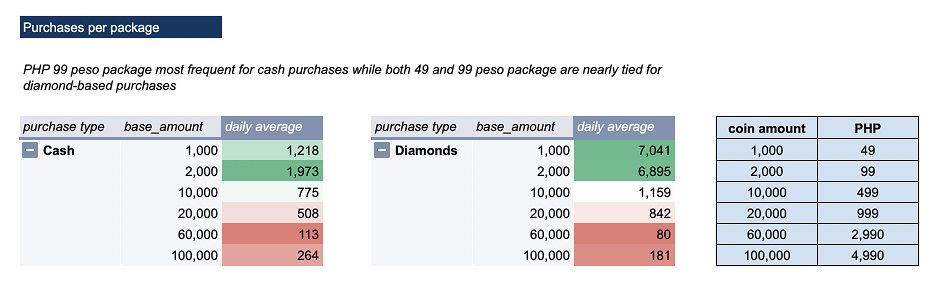
I partnered with the Business Intelligence team to map the purchase funnel in detail and find where friction happened. Together we broke down:
- Entry points, comparing livestream top-ups with the Buy Coins page on kumu.live
- Package performance, finding which tiers converted best and where drop-offs appeared
- Currency type, comparing peso and diamond transactions and their success rates
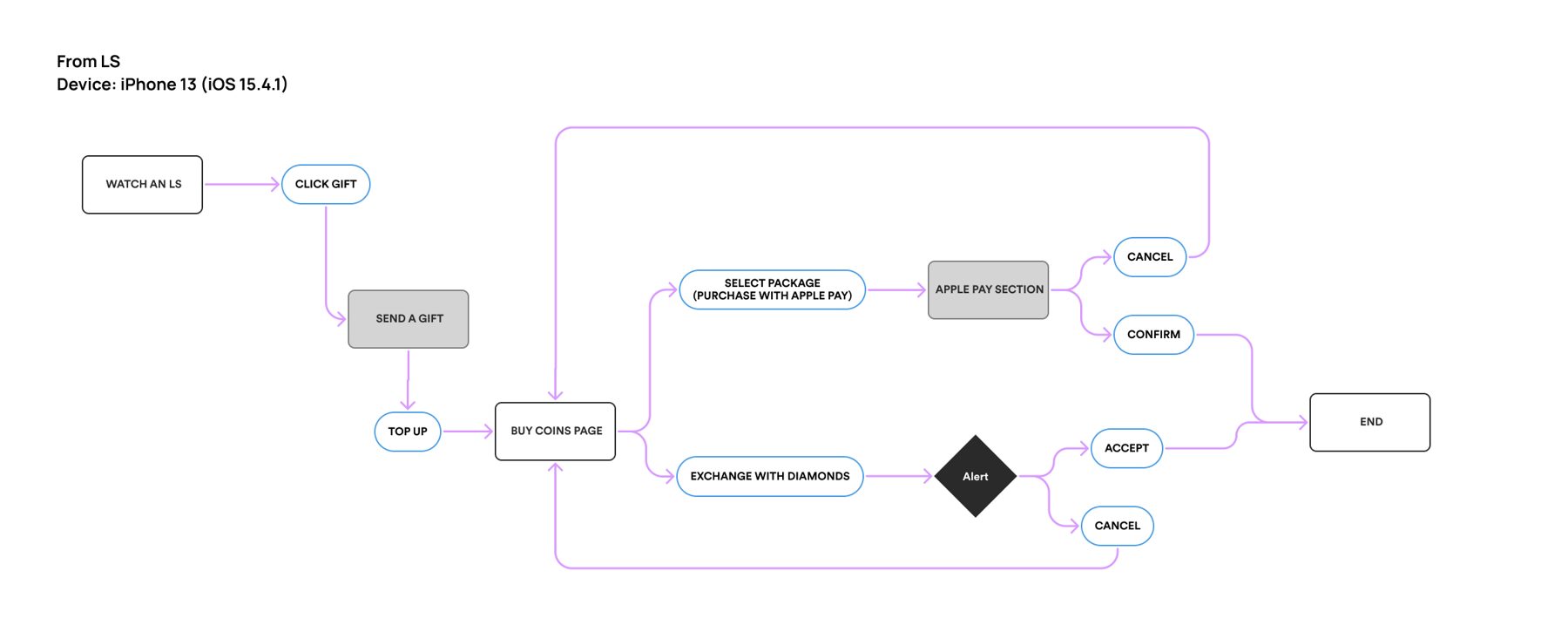
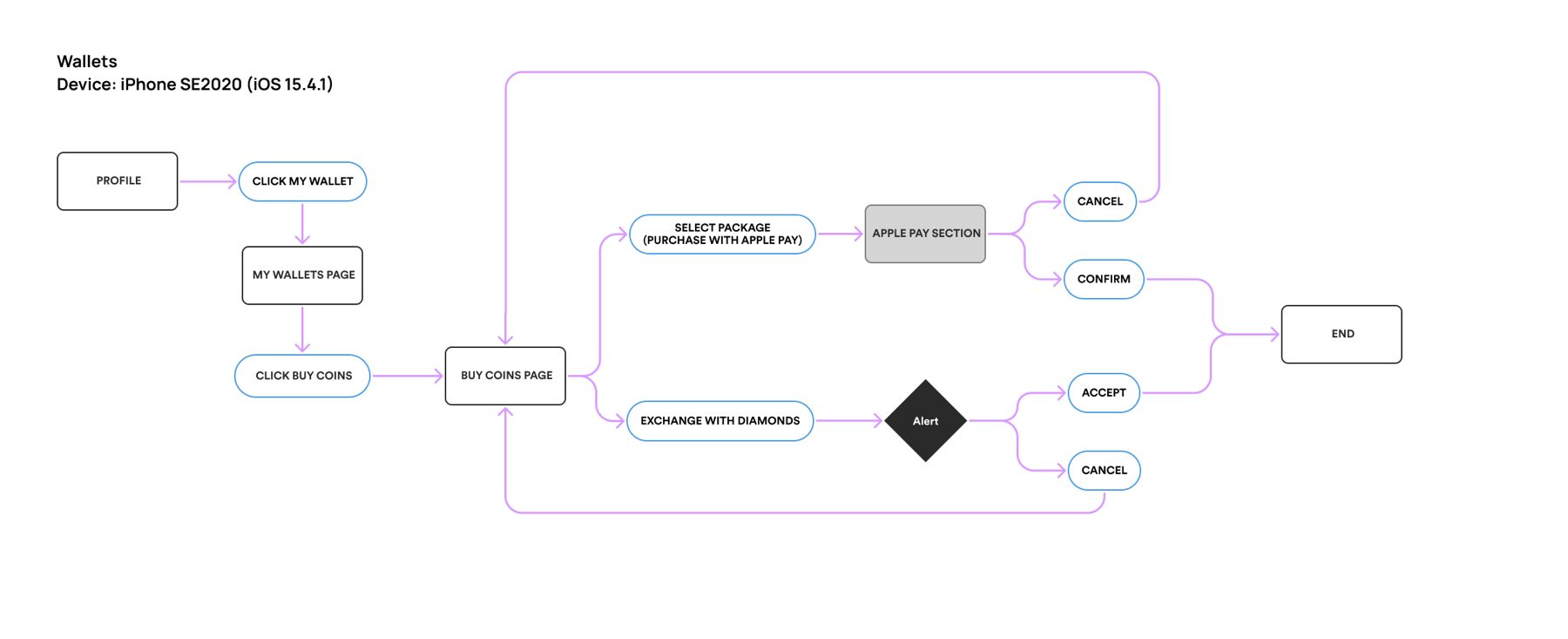
We mapped drop-offs across each funnel stage and flagged friction in package selection, calls to action and decision paths, isolating the moments where people abandoned the flow. We also tested the viability of a recurring purchase model. Mid-tier packages had the highest conversion rates, a strong signal that small, repeatable purchases were driving sustained engagement.
Pain points
To understand the why behind the numbers, I joined livestreams at different times of day to observe patterns, and spoke directly with gifters and non-gifters about how they used Kumu. Together with the data, this surfaced two critical pain points.
Interrupted livestream engagement
Running out of coins mid-stream forced people to leave the stream to top up, breaking momentum and reducing gifting.
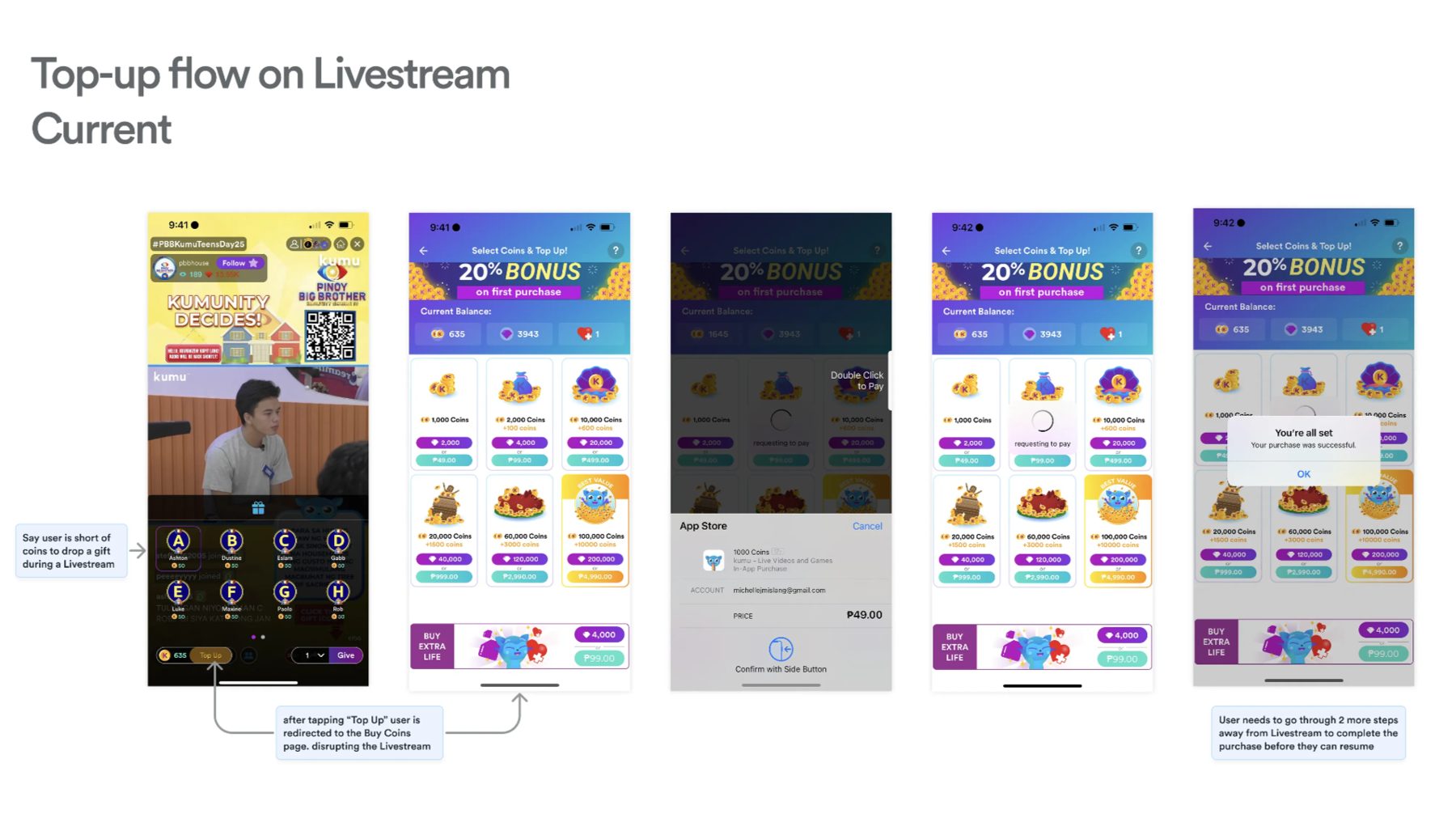
Friction in the purchase flow
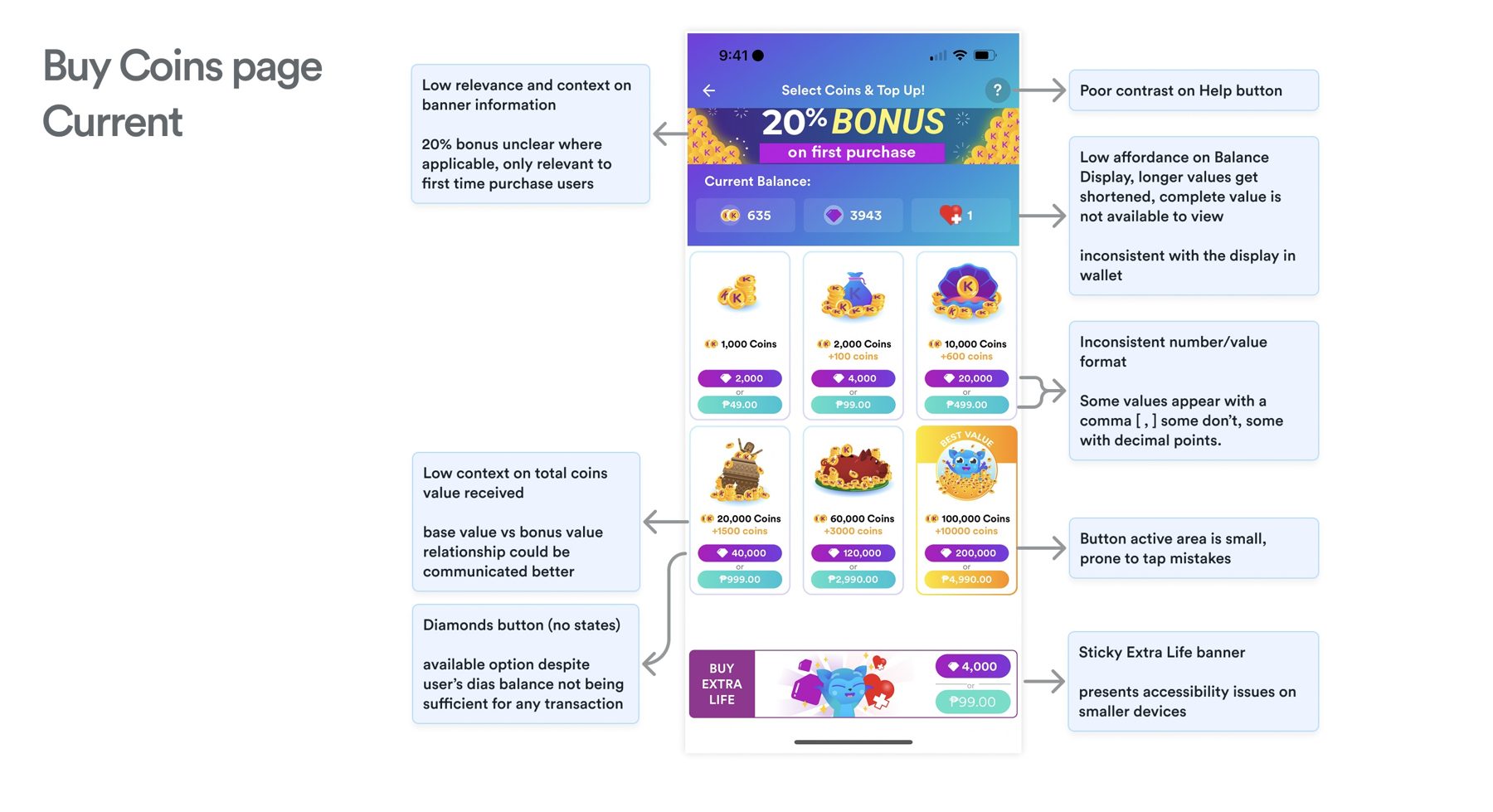
The Buy Coins page was cluttered, with unclear calls to action and too many package options. The complexity caused decision fatigue and unnecessary drop-offs.
What we designed
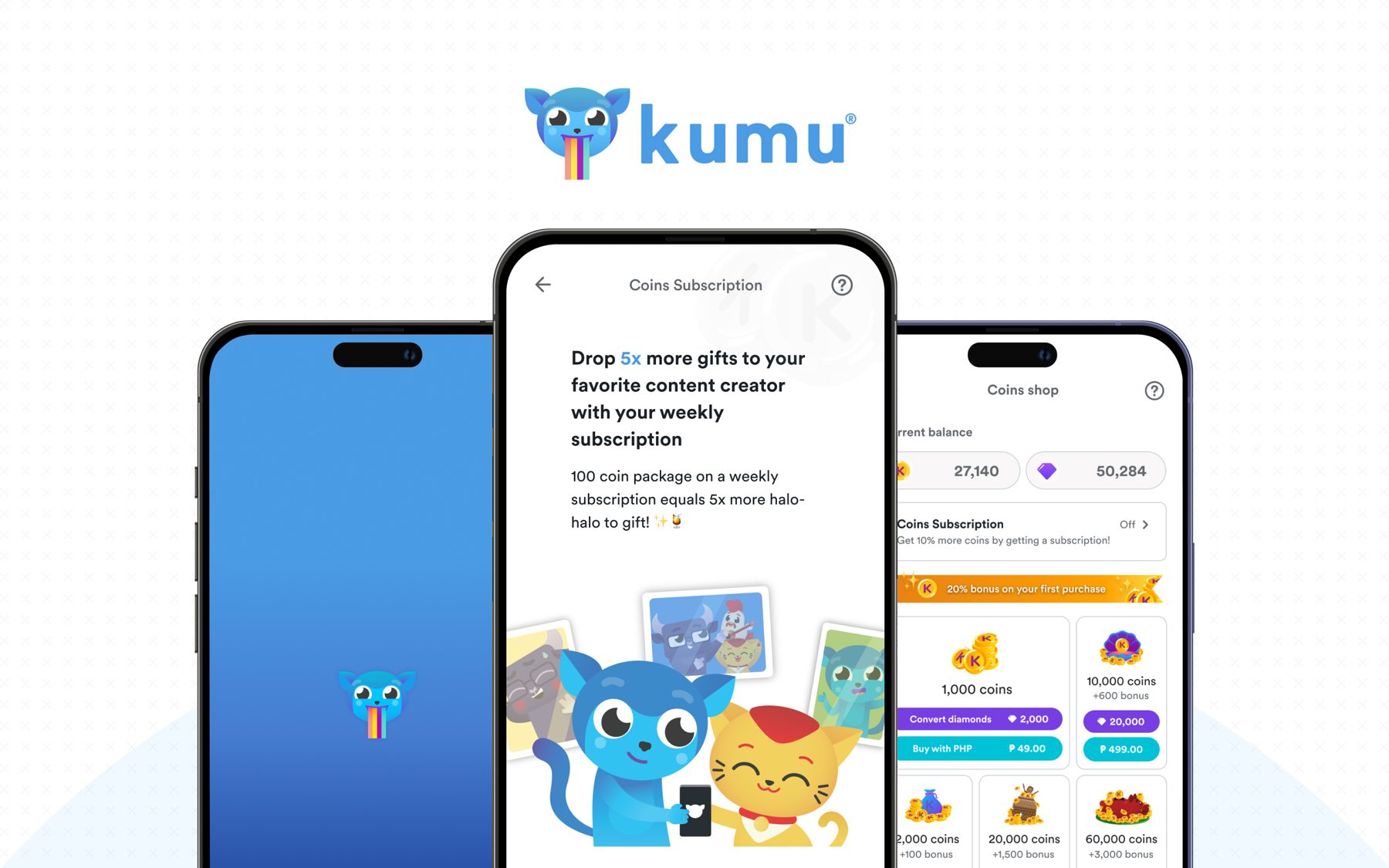
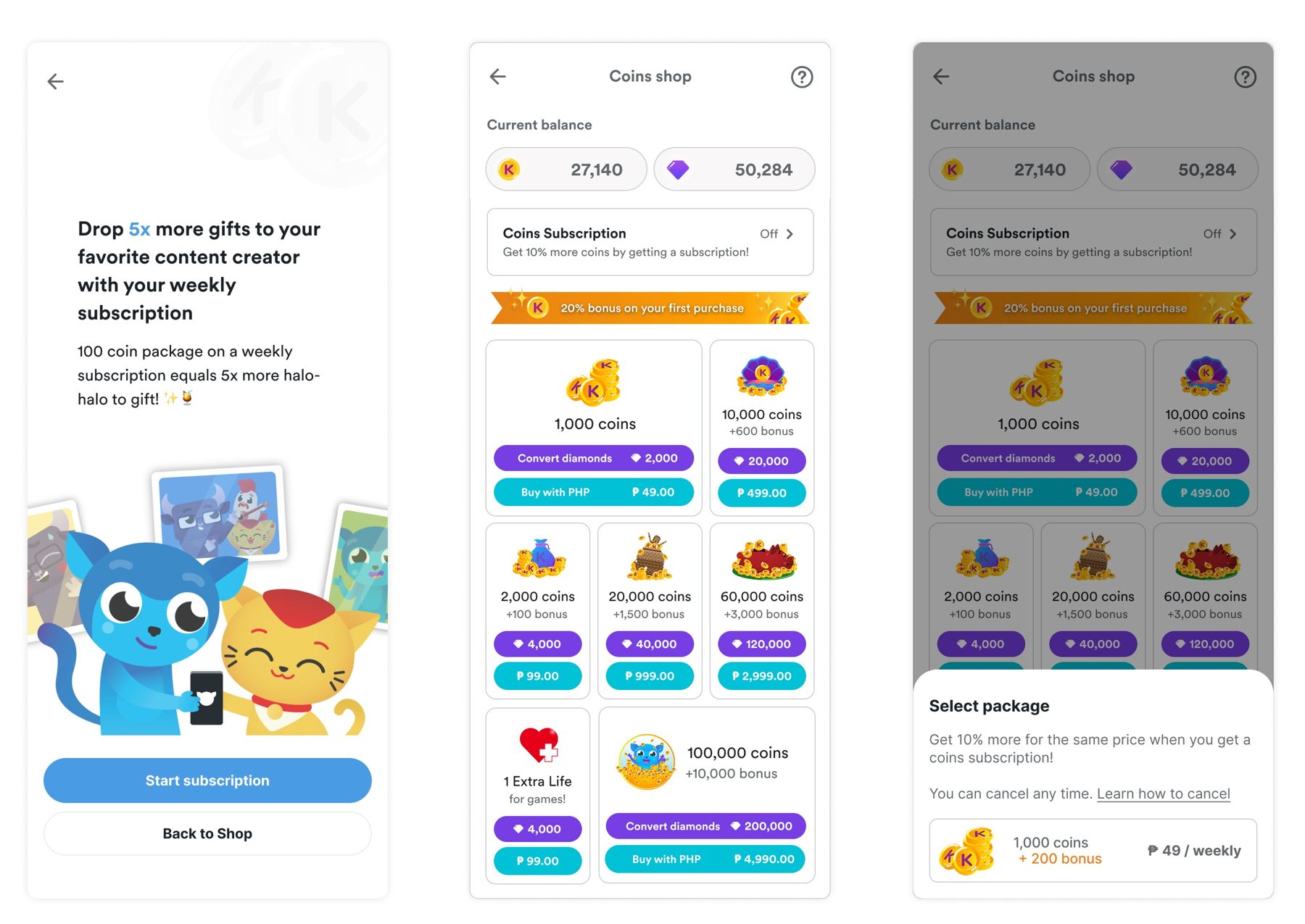
Coins Subscription
A convenient, automated way to always have coins available, so people don't run out during a livestream.
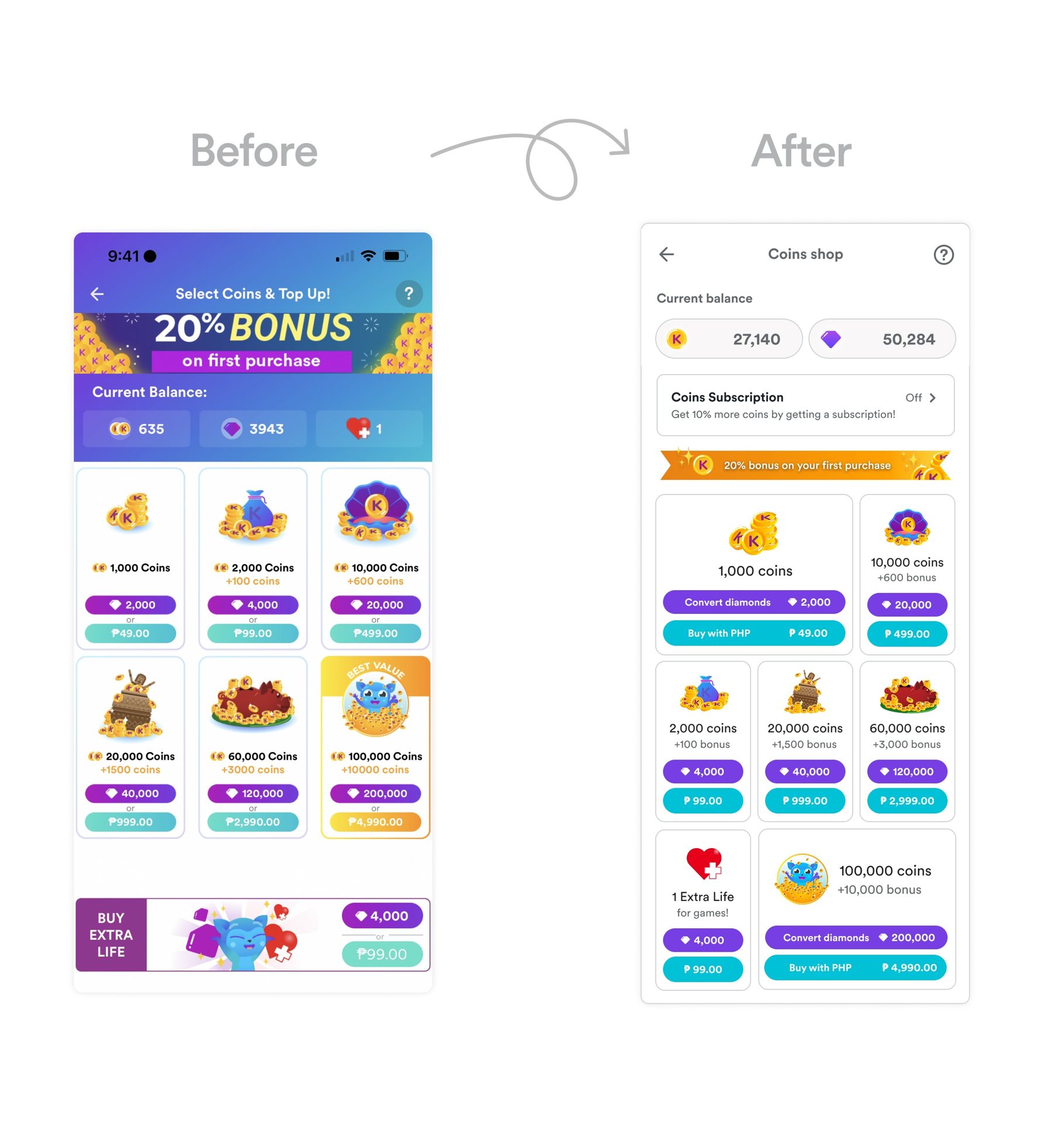
A simpler Buy Coins page
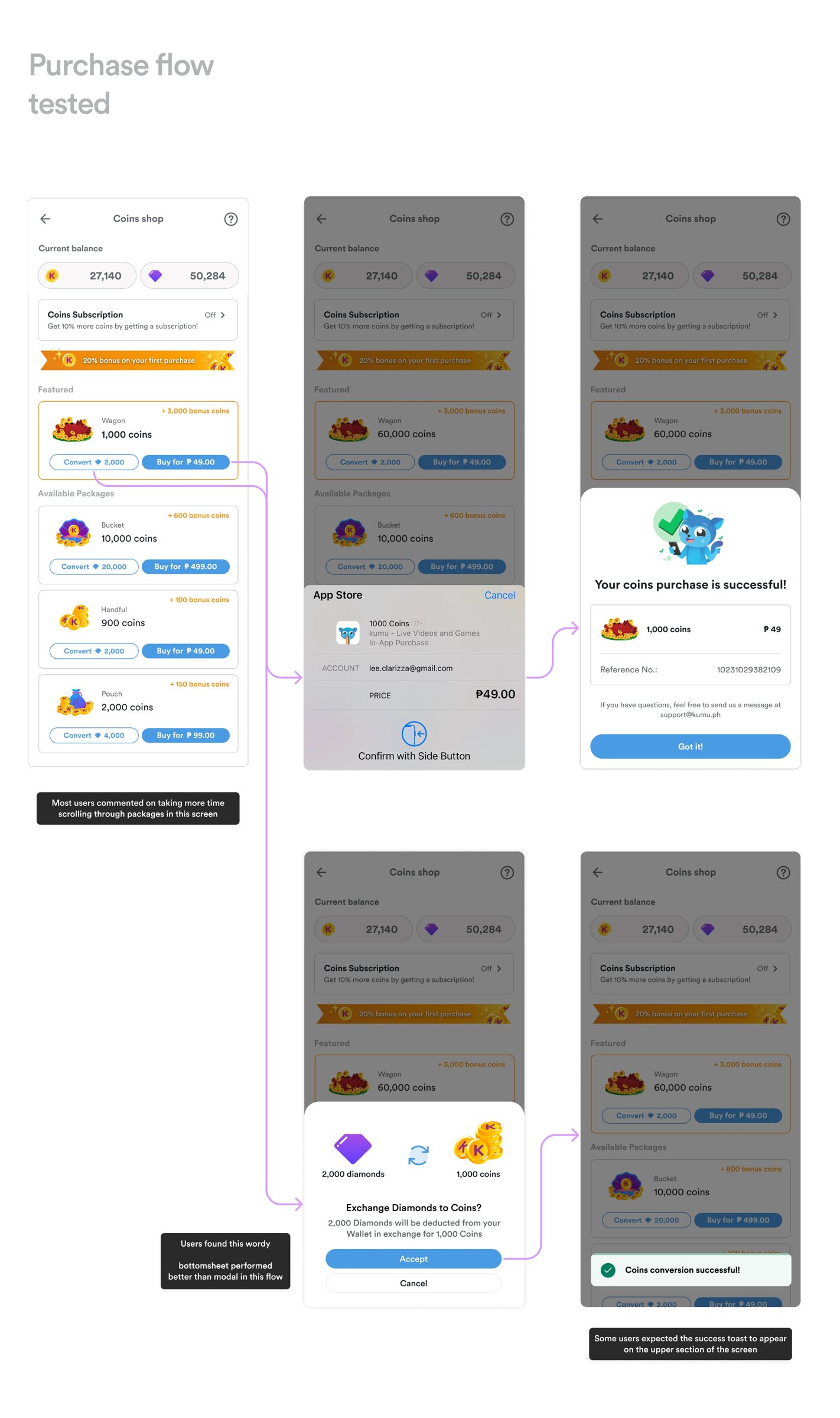
A redesigned funnel with clearer packages, fewer decision points and a smoother purchase flow.
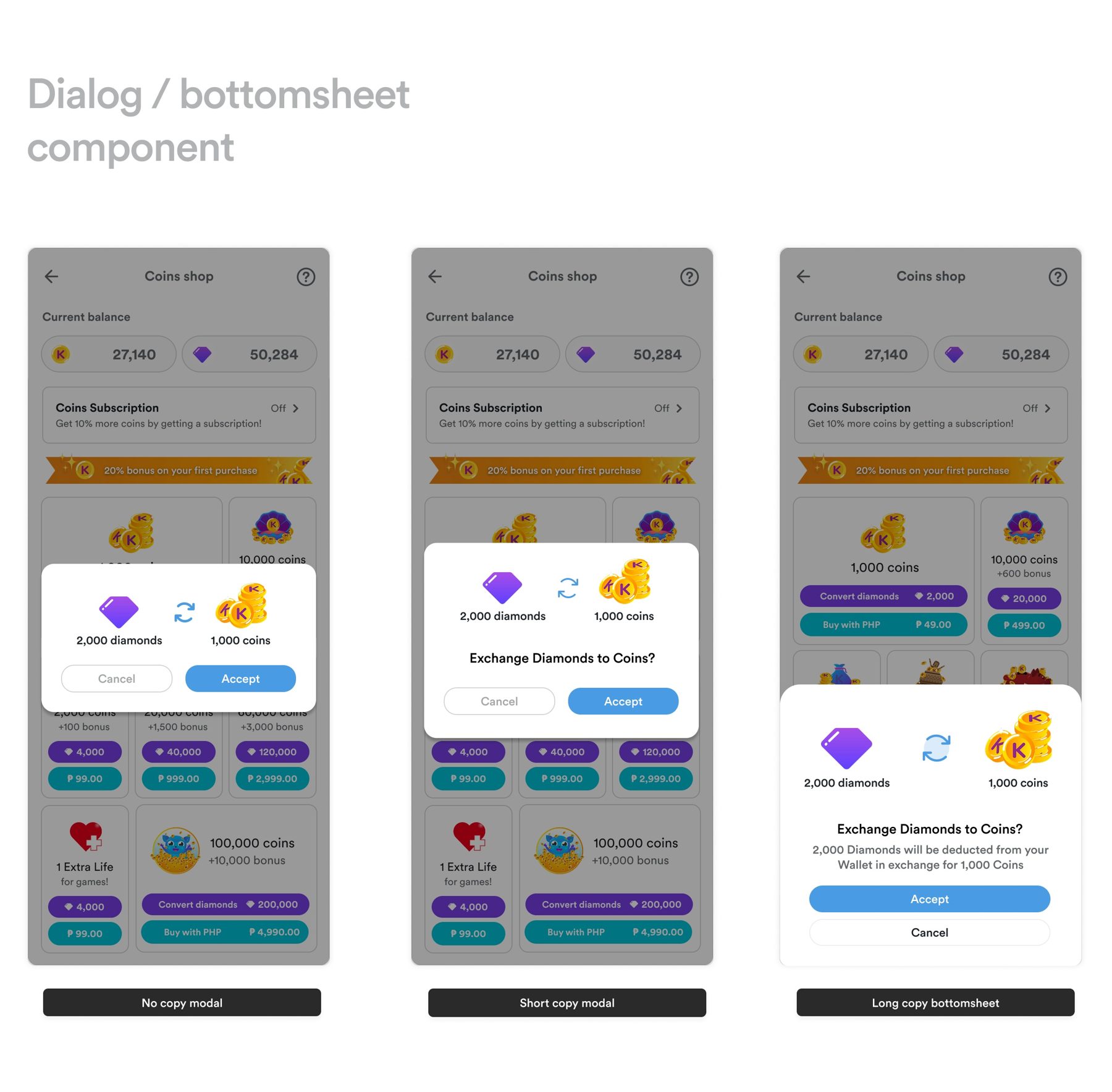
Component exploration
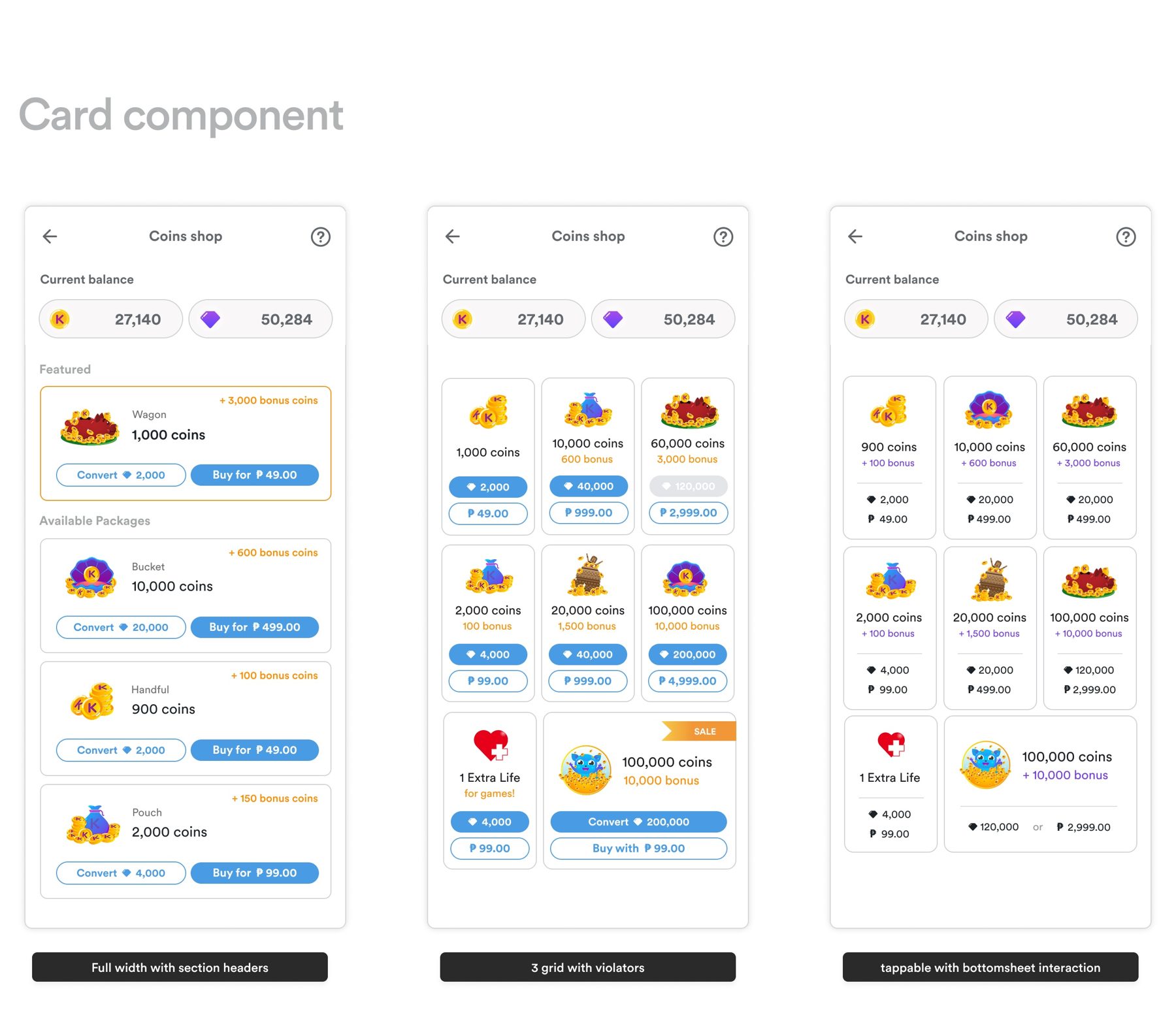
I explored several component variations across the flows and tested each one to find which performed best for usability and task completion.
What I learned
Data is a powerful design partner. Working with BI was validating and fascinating. It showed me how data brings clarity and confidence to creative choices.Convenience is retention. People want effortless ways to stay engaged. Designing for predictability and ease mattered as much as adding functionality.Clarity outperforms clutter. Improving accessibility lifted purchase completion, which translated directly into revenue. Effective design often comes from subtraction.Business growth and user trust don't have to be in tension. Designed well, they reinforce each other. As my first project as the team's senior UX designer for revenue, this shaped how I think about aligning user value with business outcomes.