Designing for emerging markets with freenet
How we redesigned SafeZone into freenet, driving growth through gamification and partnerships, and powering large-scale user events.
- Role
- Product strategy, visual and interaction design
- Team
- 2 designers, freenet scrum team
- Company
- Voyager Innovations / Maya
- Status
- Decommissioned
The idea
The project began as SafeZone, incubated by Voyager Innovations to create a local internet for all, a Philippine counterpart to Facebook's Free Basics. The goal was free access to selected websites and content, especially for underserved communities.
SafeZone launched as a web app with partner websites and occasional high-profile streams, like the 2015 Pacquiao–Mayweather fight and the 2017 Miss Universe pageant. The Miss Universe stream alone nearly doubled active usage and drove a 30% increase in downloads ahead of the event.

Pivot and redesign
By 2016, SafeZone wasn't meeting traction expectations. The decision was made to pivot toward the C, D and E market segments, and freenet.ph was born.
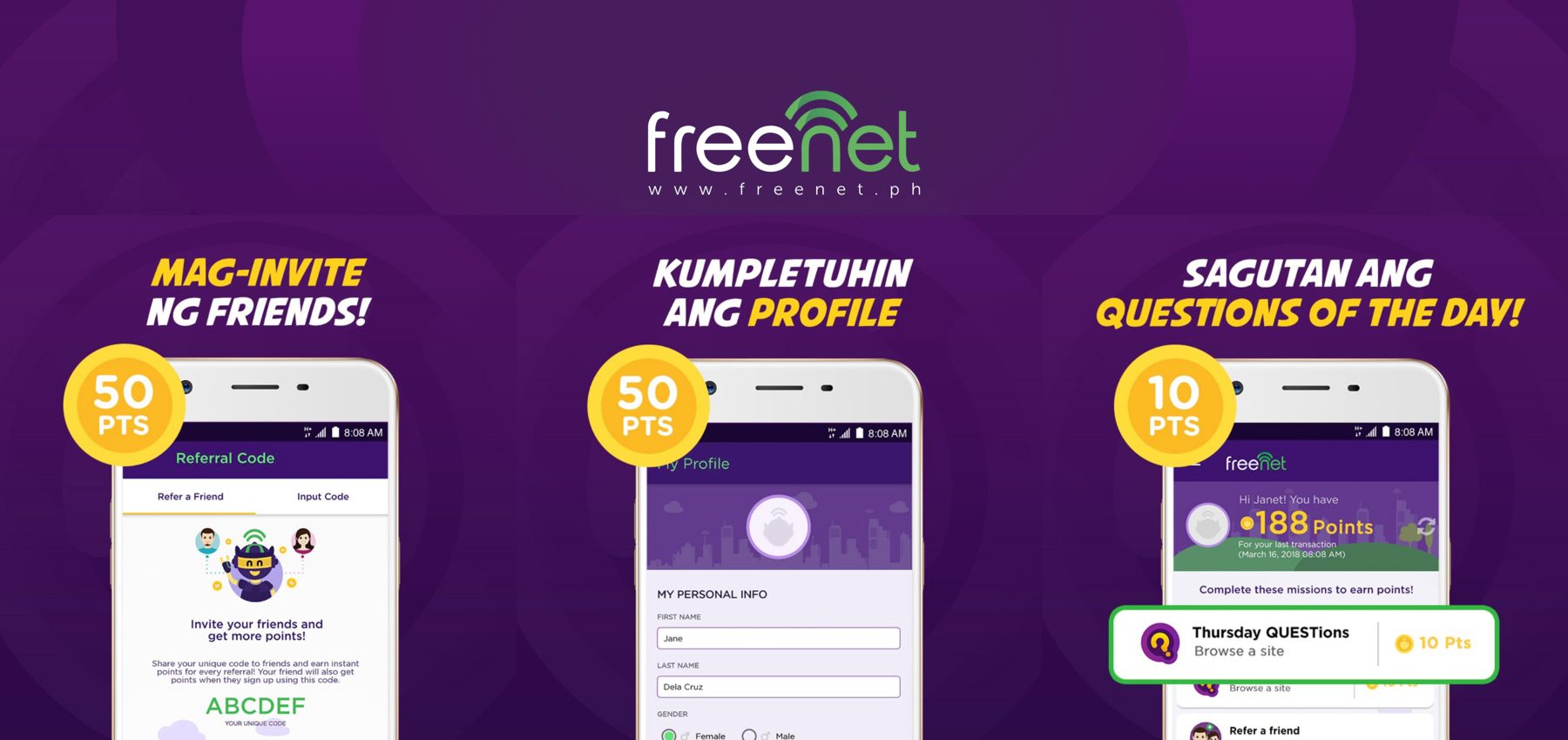
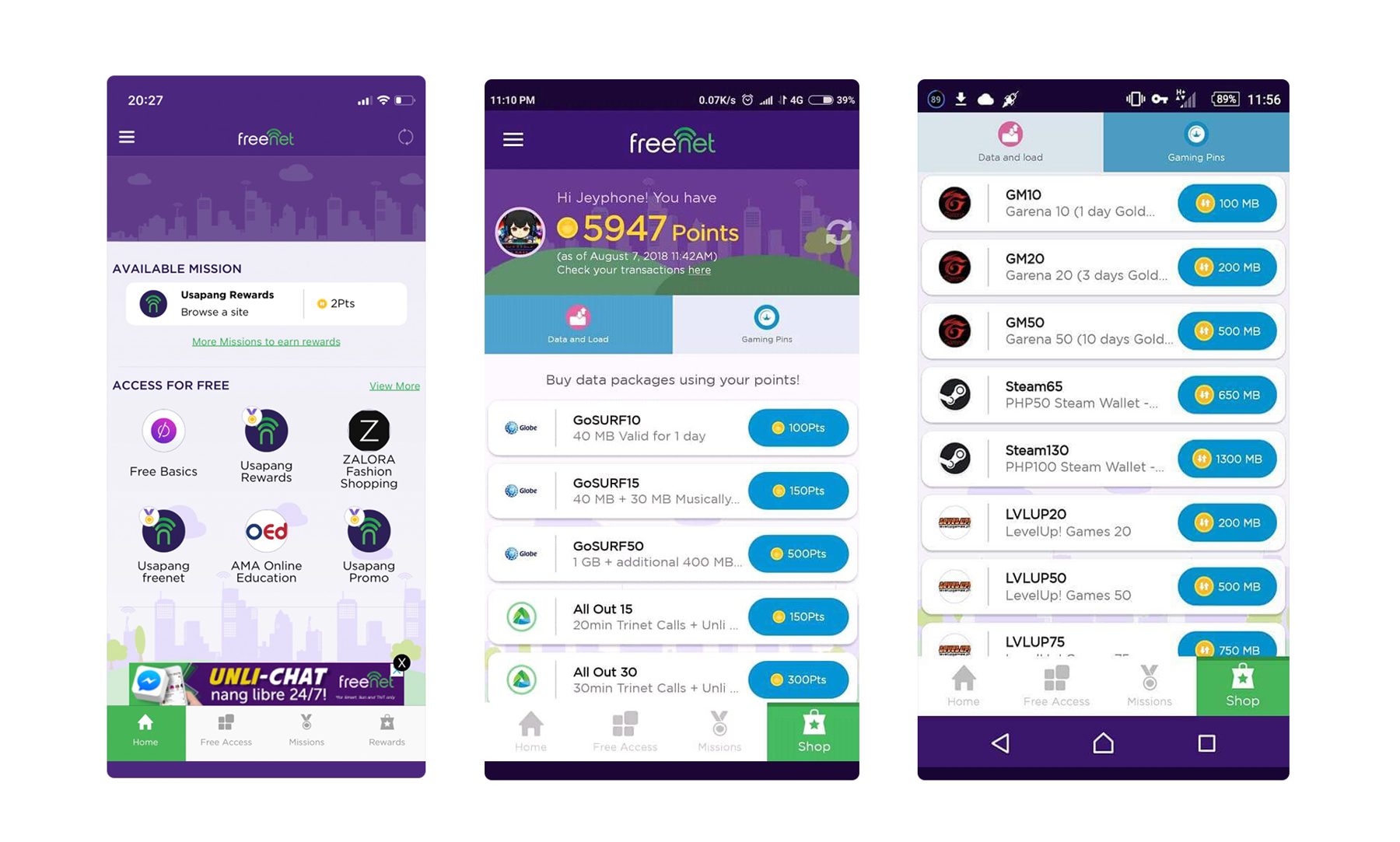
The redesign embraced a gamified model, introducing freenet points as an in-app currency. Points had real utility. People earned them through in-app tasks and daily missions, and redeemed them for mobile load, gaming pins or prepaid utilities. That loop of engage, earn and redeem made the app sticky, fun and useful for everyday needs.
After the redesign we saw a spike in downloads and usage, and the momentum carried into the next year through partnerships with Instagram, Twitter, Clash of Clans, Smule and Maya Wallet.
SafeZone, reborn as freenet, was my first big product assignment when I joined Voyager in 2015. Funding for research and testing was almost impossible to get, and UX research was barely recognised by stakeholders. There was no polished formula, just cycle after cycle of learning, improving and iterating.
The concert
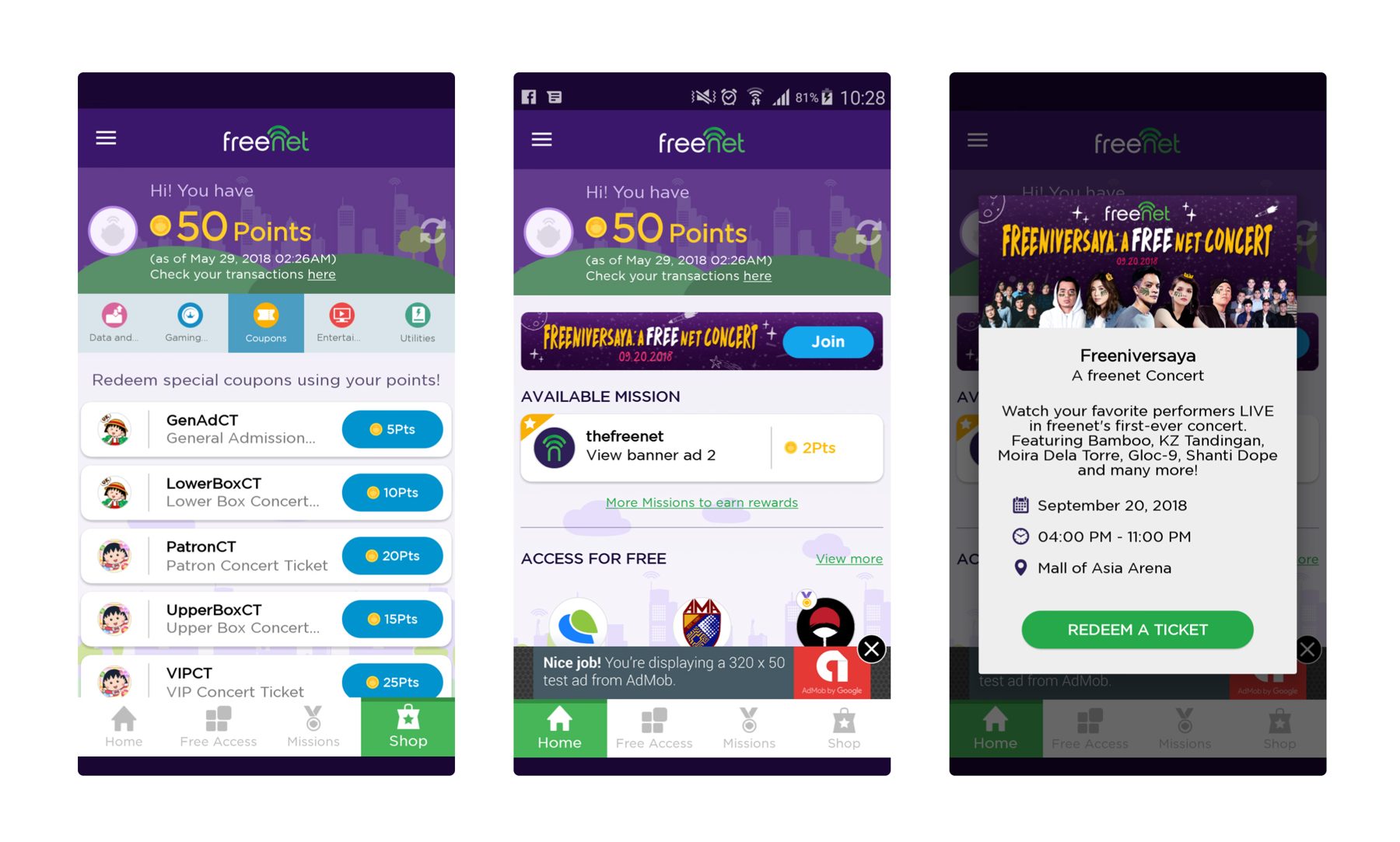
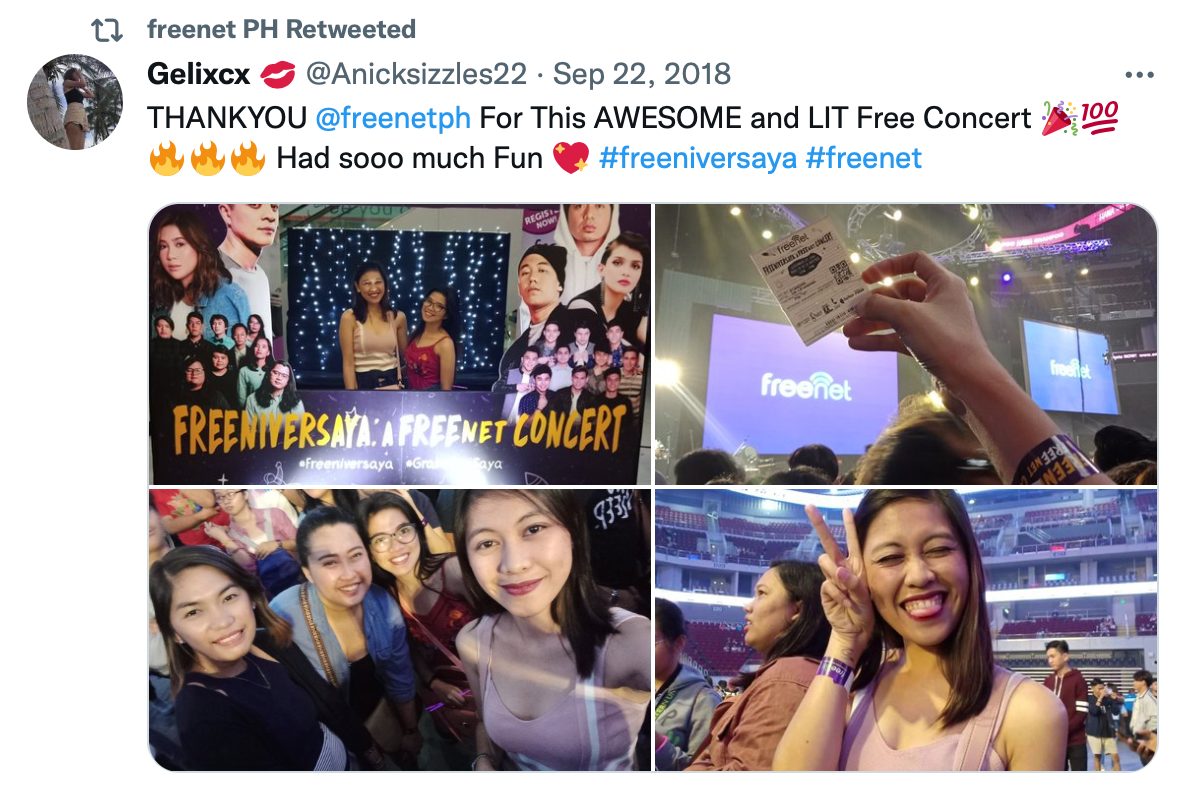
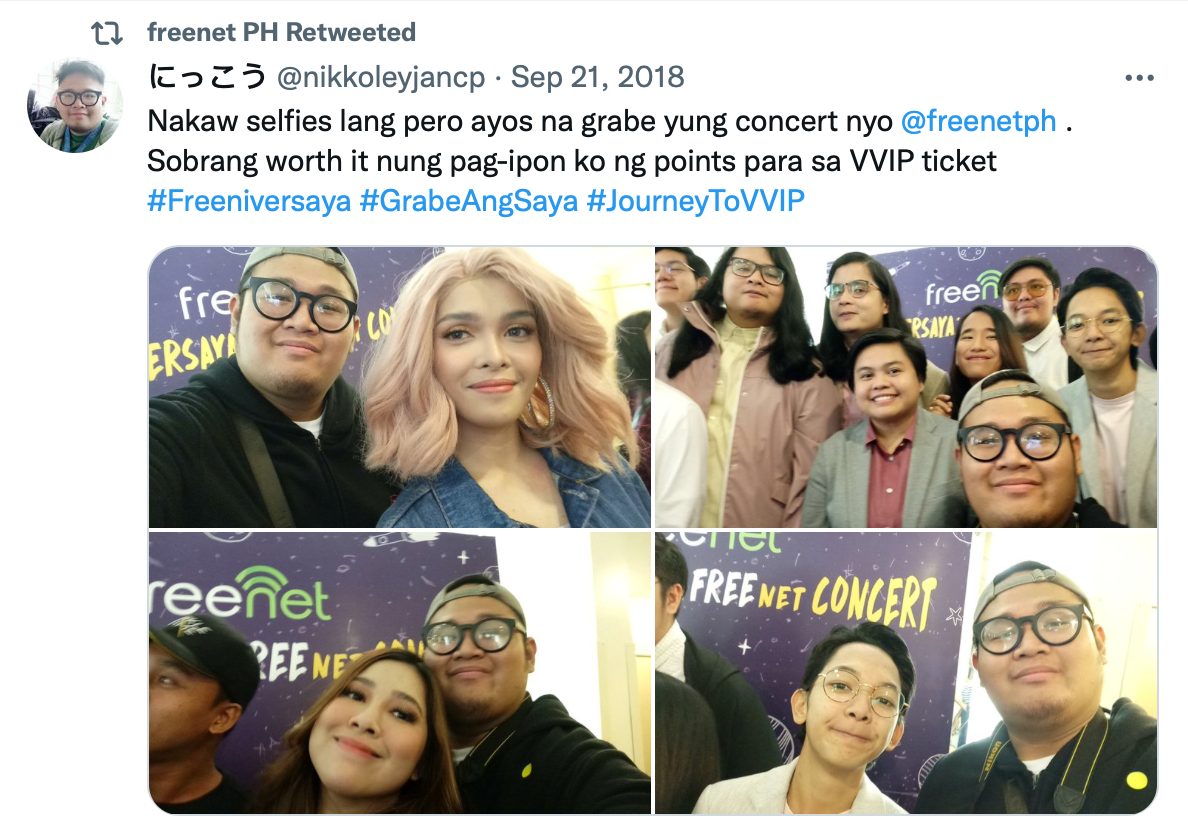
About a year after the redesign, we launched coupons that let people exchange points for rewards. That became the foundation for ticket distribution to the Freeniversaya concert. Tickets were tiered by cost, with higher tiers unlocking more perks and access.
To give everyone a fair shot, we added more daily missions so people had more ways to earn points in time. The lowest-tier tickets (5 to 10 points) still sold out almost immediately. We'd anticipated this and planned batch releases, so people still working through their daily tasks had an equal chance.
Sunset
Decommissioning freenet was bittersweet. After nearly three years on the product, it was my first experience of sunsetting one. Its close became the start of my work on the Maya consumer app, where I carried forward what freenet taught me about rapid iteration, gamification and engagement.
Read more: Rappler on the Freeniversaya concert and YugaTech on the freenet shutdown.